
Что дешевле наливной пол или плитка: Наливной пол или плитка 👉 что лучше для обустройства дома
Нелегкий вопрос, что лучше, наливной пол или плитка, возникает все чаще, поскольку эти типы отделки похожи по своим эксплуатационным характеристикам. Особенно актуальна проблема выбора для создания пола на кухне. Кафель – проверенный и часто используемый вариант, наливной же пол – относительно новое решение, которое пока еще не полностью протестировано.
 Декоративный эффект наливного покрытия
  Вариант оформления
  Эффектный пол
Плитка
На кухне керамическая напольная плитка выглядит эстетично, она прочная, легко моется. Такое покрытие придется кстати в помещении любого стиля. Если хочется оригинальной отделки, то плиточное покрытие способно имитировать даже паркет и ламинат.
Обратите внимание! Если уложить прямоугольную керамическую плитку под цвет древесины характерной елочкой – создастся ощущение паркетного пола.
 Кафель выглядит проще, но доступнее по цене
Аргументы «за»:
- Плитка долговечна, на среднестатистической кухне ей нет износа, чего нельзя сказать о паркете, ламинате.
- Керамика не страдает от химических и механических воздействий. Ламинат от температуры расслоится, а паркет вздуется.
- Разнообразие дизайна вплоть до имитации пола из массива древесины, паркета, натурального камня, ламината с фаской.
- Керамическая напольная плитка стоит дешевле современных материалов для отделки пола.
- Монтаж ее относительно легкий.
- При повреждении отдельные элементы можно заменить.
 Укладка плитки доступна любому человеку, далекому от строительства
Минусом плитки считается холодная поверхность, но это можно решить, смонтировав систему теплый пол. На кухне это более чем актуально. Еще можно использовать коврики, но только на резиновой основе. Другие будут скользить, а это уже опасно.
 Простая и доступная напольная керамика
Наливной пол
Наливной пол заслуженно называют самым практичным для кухни. Декоративный эффект, которого удается достичь, настолько высок, что пока что ни один вариант, в том числе паркет и ламинат, в этом сравниться с ним не могут.
Наливное напольное покрытие для пола на кухне взяло все лучшее от ламината, паркета, плитки, линолеума и бетонной стяжки. Оно не страдает от механических воздействий. Но только при условии, что монтаж выполнялся по всем правилам.
 Монтаж наливного пола легким не считается – нужно учесть много нюансов
  Технология распределения смеси
Наливной пол бесшовный, не пропускает влагу, высокая температура ему тоже не страшна. Это значит, что теплый пол под наливные составы можно оборудовать, что не получится сделать при монтажа на кухне, например, линолеума.
Минусов у полимерных наливных составов как таковых нет. Залог успешного создания покрытия – внимание к деталям – упустить ничего нельзя. В противном случае желанного эффекта от пола не будет. Единственное, что может отпугнуть от этого решения, – цена.
 Оригинальная отделка
Что же выбрать?
Мы узнали больше о каждом материале, но вопрос, наливной пол или керамическая плитка, еще остается открытым. Помочь с выбором помогут такие рекомендации:
- Если есть финансовая возможность, стоит выбрать наливной пол.
- В поисках недорогого и практичного напольного покрытия лучше остановиться на плитке.
- Монтаж самонивелирующего пола лучше отдать в руки профессионалов, ведь один минимальный недочет – и поверхность получится неаккуратной.
- Кафель можно смонтировать своими руками, пройдя теоретическую подготовку.
- Ремонт наливного покрытия проблематичный и дорогой, но если он залит правильно, то представляет собой вечный пол.
- Кафель поддается локальному ремонту. Срок службы такого пола – до 25 лет.

Вывод
Кафель или наливной пол – стоит решать, исходя из финансовых возможностей, в первую очередь. Оба покрытия долговечны и прочны, что предпочесть, зависит от намерений владельца.
Вконтакте
Google+
Средняя оценка оценок более 0 Поделиться ссылкойЧто дешевле — наливной пол или плитка
Наши Менеджеры:
полы по типам
объектов
Плитка или наливные полы: что выбрать для оформления дома?
Напольные покрытия – важные элементы внутри помещений. Особенно, когда речь идёт о способности сохранять тепло. Именно через такие виды пола уходит иногда до 20 процентов тепла в частных домах. Но какие материалы позволят добиться лучших результатов? Сначала дадим общее определение соответствующим понятиям. Это позволит определить, что дешевле.
Наливной пол – это разновидность специальных смесей, которые отличаются от аналогов способностью к самовыравниванию. То есть, в жидком виде ими покрывают основание. После этого составы сами распределяются по поверхности настолько равномерно, насколько это возможно. Остаётся только подождать некоторое время, пока идеально ровная и гладкая поверхность пола приобретёт законченный внешний вид. Минимальная толщина в данном случае – 3,5 миллиметра. Но возможны модификации и с другими показателями, когда используется пол.
Пол наделяется следующими преимуществами:
- Долговечность, которой обладает наливной материал.
- Пожаро-, влагостойкость.
- Отсутствие токсичных компонентов.
- Привлекательный внешний вид.
- Возможность самостоятельно выполнить монтажные работы, не приглашая мастеров.
Недостатки у полов есть, но они больше связаны не с функциональностью, а с внешним видом. Например, у некоторых вариантов слабая устойчивость к химикатам. И со временем пол может пожелтеть. А вот разновидности напольной плитки практически не нуждаются в представлении. Она появилась на рынке достаточно давно. С каждым годом внешний вид таких изделий становится всё привлекательнее, продолжают совершенствоваться применяемые решения. Покупатель и сам может решить, что дешевле, наливной пол или плитка. Прайс-лист на монтаж плитки вы можете увидеть на нашем сайте.
Стандартная керамическая плитка имеет следующие достоинства:
- Широкий выбор цветовых решений, вариантов оформления.
- Срок годности, не меньше 30 лет.
- Сопротивляемость высокому уровню влажности.
- Гигиеничность, которой наделяют любую плитку.
- Отсутствие токсических составляющих.
Несмотря на кажущуюся прочность, плитка – достаточно хрупкий материал, который укладывается на пол. Наверняка многим хоть раз приходилось видеть его в треснувшем состоянии, когда поверхность просто не выдержала веса упавшего предмета. Кроме того, трудно заменить только 1 элемент, когда возникает такая необходимость. Из дополнительных свойств – низкая звукоизоляция вместе с высокой теплопроводностью.
Существует так же аналогичный наливной пол, имеющий ПВХ-основу. Фактически, у этих изделий есть минимум половина преимуществ от предыдущего варианта. Но в финансовом плане такое приобретение гораздо выгоднее. Слабая химическая стойкость и возможная токсичность относятся к недостаткам. Как и неспособность противостоять механическим повреждениям, от чего наливные полы страдают.
Монтаж наливного пола требует больше всего усилий и вложений в финансовом плане, по сравнению с другими материалами. Но такой пол всё равно остаётся весьма популярным для обустройства внутреннего пространства.
Возможно Вас заинтересуют:
Дешевый наливной пол: советы специалистов
Благодаря развитию технологий в строительстве, можно достаточно просто создавать высококачественные напольные покрытия – наливные полы. Это сравнительно новые решения в сфере строительства и ремонтов. Многие думают, что наливной пол – это дорого, а дешевый наливной пол – это миф. Давайте узнаем, так ли это и существует ли бюджетная возможность обустроить такие покрытия.
Виды
Любые виды наливных полов объединяются своей способностью к самовыравниванию. То есть полимерная или другая жидкая масса способна сама принимать точную горизонтальную плоскость. Высота наливного покрытия – не больше 5 миллиметров, поэтому стяжка обязательна, и она должна быть качественной, иначе скоро придется делать дорогой ремонт дешевого наливного пола.
Гипсовые полы
Эти составы изготавливают из специальных наполнителей и связующих гипсовых веществ. Такой пол быстро высыхает и затем так же быстро набирает свои прочностные характеристики. Что касается применения состава, то производители рекомендуют использовать их только в сухих условиях. После обустройства чернового пола на основе данной смеси поверхность следует прогрунтовать, а затем можно выполнять финишную отделку. Финишное покрытие нужно, чтобы защитить основу от истирания.
Цементные
Также можно выделить цементные наливные полы. Эти смеси применяют в качестве черновых покрытий. Цементный пол также достаточно прочен. После полного высыхания его можно окрашивать специальными красками.

В большинстве случаев цементный наливной пол покрывают особыми отделочными слоями. Если выбирать, что дешевле – наливной пол или плитка, то лучше остановиться на плитке.
Полимерные
Полиуретан-цементные полы состоят из полиуретановой добавки и цементной основы. За счет полиуретановой добавки покрытие получится нескользким. Основание практически не подвергается истиранию и вполне может использоваться в качестве финишного покрытия. Этот наливной пол подходит не только для горизонтальных поверхностей, но и используется под самыми разными углами.
Акрил-цементные полы имеют еще большую прочность. Этой прочности достаточно с избытком для обустройства полов на промышленных объектах. Материал легко перенесет даже серьезные температурные перепады и может обустраиваться в неотапливаемых помещениях без каких-либо рисков.
Группа метилметакриловых полов основана на метакриловой смоле. Покрытие отличается универсальностью и подходит для промышленных и производственных объектов в самых разных сферах. Смеси подойдут для обустройства основания как в помещении, так и на улице. Такой пол можно обустроить в морозильной камере. Также он хорошо выдерживает ультрафиолет.
В основе полиуретановых полов лежит полимерный эластичный пол. Здесь среди характеристик высокая гибкость, а также хорошая стойкость к вибрациям. Если добавить в смесь краситель, то получится отличное декоративное финишное покрытие.

В основе эпоксидных полов, как не трудно догадаться, лежат эпоксидные смолы. Они подходят для любых помещений. Пол можно использовать на любых типах оснований – на бетоне, древесине. Слой тонкий и бесшовный, устойчивый к любым химическим воздействиям и абразивам.
Технические характеристики
Составы различаются по тому, на сколько именно нужно поднять поверхность пола. Одна из самых важных характеристик любых наливных полов – это толщина. Различают высоконаполненные полы, самовыравнивающиеся и тонкослойные.
Первые отличаются высотой слоя в 5 мм и более. Такие высокие основания применяются для выравнивания черновых покрытий либо при создании дизайнерских полов красками. Второй вариант имеет высоту до 5 мм. Это дорогие и дешевые наливные полы, которые могут укладываться самостоятельно. Тонкослойные имеют высоту не более 2 мм и предназначены только для финишной отделки.

Также важна скорость высыхания состава. Смеси с быстрым высыханием – от 30 минут до 1 часа. Быстросохнущие составы полностью высохнут за время от 2 до 6 часов. Есть продукция со средним временем засыхания – от 12 до 24 часов. Можно выделить и долгосохнущие решения. Время может колебаться от 24 до 48 часов.
Необходимо заранее точно рассчитать все нагрузки, подобрать необходимую прочность, выбрать подходящие материалы и произвести работы по строительным нормам и требованиям производителя смесей. Только после таких процедур можно рассчитывать на качественное, а главное – на долговечное основание. Дешевый наливной пол также требует такого ответственного подхода, иначе средства и усилия будут потрачены зря.
Черновая основа
Необходимо учитывать, что любые виды наливных полов требуют предварительной подготовки поверхностей перед их обустройством. Если имеется бетонная стяжка, то на нее можно монтировать любые виды наливных напольных покрытий. Если поверхность достаточно прочная, в ней отсутствуют трещины, то какой-либо дополнительной подготовки не требуется. Если стяжка готова, то можно выбирать, что дешевле – наливной пол или ламинат. В жилых помещениях лучше остановиться на ламинате, если ремонт бюджетный.

Для обустройства наливных полов нужна бетонная стяжка, затем слой грунта. И далее укладывают смесь. Для работы понадобится инструмент – обычный валик, валик игольчатый и ракля. Если вместо стяжки имеются какие-либо деревянные решения – листовая фанера или другие древесные изделия, то эта основа должна быть покрыта цементной стяжкой, прежде чем обустраивать наливной пол.
Если есть необходимость в закрытии системы “теплый пол”, то подойдут наливные полы на основе минеральных компонентов. Полимерные составы предназначены лишь для создания тонких финишных слоев. Нанесение состава максимально тонким слоем – это возможность получить дешевые наливные полы.
Как получить максимально дешевое покрытие?
Настоящие составы на полимерной основе достаточно дорогие – их кладут способом налива. Это потому, что для наливных полов очень важно соблюдение двух условий.

Так, невозможно снизить стандартные траты на материалы на единицу площади, так как это предусматривается по технологии покрытия. И сама технология укладки отнюдь не простая, какой может казаться на первый взгляд.
Если эти требования не будут соблюдаться, то самый дешевый наливной пол повлечет большие проблемы и огромные затраты.
Как удешевить обустройство наливных полов?
На сегодняшний день имеется масса различных видов полимерных напольных покрытий. И с декоративной точки зрения, и с точки зрения технических характеристик они чаще всего ни в чем не уступают своим недорогим “наливным” аналогам. Но при этом стоимость таких решений значительно ниже. А это именно то, что нужно.
Кварцнаполненные полимерные покрытия
Это материал, процесс укладки которого значительно облегчен. Недорогой кварцевый песок в конечном итоге делает состав дешевле. Полимерные покрытия такого типа более устойчивые к химии и к другим воздействиям. Для укладки нужны лишь базовые навыки штукатурных работ. Что касается декоративных возможностей, то они такие широкие, как и у полимерных полов.

Заключение
Если задуматься, что дешевле – стяжка или наливной пол, то стяжка однозначно выйдет дешевле. Но по сравнению с наливными полами характеристики стяжек значительно ниже. Поэтому, если на напольное покрытие будут оказываться высокие нагрузки, тогда следует отдать предпочтение дорогим, но качественным наливным полам.
Наливной пол или плитка что лучше
Наши Менеджеры:
полы по типам
объектов
Заказать расчёт
Главная Статьи Наливные полы Наливной пол или плитка что лучшеНаливной пол или плитка. Что лучше?
Кухонный пол подвергается большим нагрузкам при эксплуатации. Разлитая вода, упавшая тарелка, острые ножки стульев – это далеко не все, что может запросто испортить недостаточно прочный материал. Предпочтение отдают материалам, которые способны выдержать такие испытания. В последнее время традиционное покрытие – керамическую плитку – потеснили современные наливные полы. У наливных полов есть свои плюсы и минусы, зная которые, легко понять, что лучше именно для вас.
Особенности керамической плитки
Практичная керамическая плитка за много лет стала привычным покрытием для пола. У нее много очевидных преимуществ:
- долговечность;
- простота ухода;
- богатый выбор расцветок;
- относительно невысокая цена;
- устойчива к воздействию бытовой химии.
Сейчас на рынке строительных материалов представлена плитка на любой вкус и кошелек, что позволяет каждому потребителю подобрать подходящий для себя вариант.
При этом у нее есть и недостатки:
- скользкая поверхность, особенно если на нее попала вода;
- хрупкая, легко разбить;
- холодная, если не обустроить теплый пол;
- требует навыка укладки и ровной основы;
Пол, выложенный керамической плиткой, прослужит дольше деревянного или выполненного из ламината или линолеума.
Особенности наливных полов
Все чаще потребители, размышляя о том, какое покрытие положить на пол, выбирают на относительно новый тип покрытия – наливной пол.
Его преимущества:
- не нужно дополнительно выравнивать поверхность пола перед установкой;
- долговечность;
- стойкость к истиранию и царапинам;
- не восприимчивый к агрессивной химии;
- эстетичный вид, можно выбрать любой дизайн;
- быстро высыхает и готов к использованию;
- огнеупорность;
- простая уборка.
Наливной пол обладает и недостатками:
- сложный монтаж, требующий опыта и соблюдения технологий;
- если такой пол со временем надоест, помните, что его будет нелегко снять;
- высокая цена.
Полы не имеют швов, а значит любые загрязнения легко удалить. Ножки мебели, бытовой техники не повредят пол. Со временем наливной пол может утратить первоначальный блеск, в этом случае его можно обработать специальной мастикой.
Базовые технологии ремонтных работ
Окончательное решение, что положить на пол в кухне, зависит от финансовых возможностей и личных предпочтений. В основном, плитку выбирают те, кому важно за небольшую цену получить прочное, привлекательное покрытие на кухне. Наливной пол – долговечное покрытие, выбрав его, вы можете быть уверены, что новый ремонт придется делать нескоро, высокая стоимость материалов и работ гарантирует качественный результат, с ценами на материалы вы можете ознакомиться здесь. Благодаря устойчивости к влаге такое покрытие выдержит разлитый кипяток, а прочная поверхность не повредится при падении ножа. Мытье пола тоже не доставит неудобств.
Возможно Вас заинтересуют:
Часто в процессе ремонта для выравнивания пола используют бетонную стяжку или наливной пол. Неспециалистов интересует: что же лучше? В точки зрения технологии выполнения работ эти два способа схожи. Если рассматривать финансовые вложения и эксплуатационные параметры настила, то разница «налицо».
Для укрепления поверхности сухой стяжкой нужно покрытие толщиной не менее трех сантиметров. Тогда как использование самовыравнивающих составов предполагает слой в 5 мм. И если слой тоньше указанного значения, говорить о качестве нельзя. Наливной пол поддастся разрушению даже при незначительных нагрузках.
Использовать наливной пол вместо стяжки можно. Но есть вариант лучше — одновременное использование бетонной стяжки и наливного пола. Об этом и пойдет речь в статье.
Отличия сухой бетонной стяжки и наливного пола
Чтобы понять, какой технологический процесс для укрепления перекрытий подходящий, и что лучше использовать, важно выяснить различия:
- наливной пол укрепит любую поверхность. Технологический процесс прост и занимает немного времени, в отличии от бетонной стяжки. Но и стоимость удовольствия высока.
 Наливной пол
- бетонная стяжка предполагает выравнивание поверхности. Не придется сильно тратиться. Но вот работы будет хоть отбавляй. Метод подойдет для поверхности с перепадами высоты более трех сантиметров.
 Бетонная напольная стяжка
Немного информации о бетонной стяжке
Когда в процессе эксплуатации на бетонном перекрытии появляются неровности и дефекты, приходит время выравнивать настил. Если не производить выравнивание поверхности, нереально правильно и качественно уложить ламинированное и паркетное покрытие, линолеум. При использовании керамики и керамогранита неровный настил повысит количество клеевого состава.
Выравнивать пол можно и песочно-бетонным раствором. Но есть ограничения:
- толщина слоя бетона — не менее 30 мм;
Важно! Внутрь бетонной стяжки можно сразу производить укладку элементов системы «теплый пол».
 Укладка системы «теплый пол» в бетонную стяжку
- низкий уровень технологичности. Поэтому используются маятники. А с помощью правила выравнивается раствор.
Не стоит использовать стяжку из бетона при наличии напольного настила с тонкими стенками, к примеру: линолеума или полихлорвиниловой плитки. Поскольку готовая поверхность не будет ровной и гладкой. Но этого требует основание под укладку такого покрытия. Поверхность можно отшлифовать. Но потратите дополнительное время и денежные средства.
Информация о наливных полах
Если необходимо выравнивание покрытия с небольшим перепадом высоты, лучше самовыравнивающийся гравитационный состав. Существует несколько видов такой смеси для финишной отделки. То цена на него высока, и если нужно выровнять большую территорию, не всегда получится отыскать такие средства. А из-за перепадов высоты более трех миллиметров лучше сделать бетонную стяжку, а потом покрыть слоем самовыравнивающейся смеси в 5-10 мм, в зависимости от сложности и состояния пола.
Рациональность применения технологических схем выравнивания пола
При ремонте важна стоимость строительного материала. Чтобы взвесить «за» и «против», стоит знать некоторые нюансы.
Классическая стяжка с применением цементно-песочного раствора
Перед тем как отправляться за покупкой необходимого строительного материала, производят отбивку уровня в помещении. После этого можно говорить о точности расчета расходного материала.
- Для разметки лазерным уровнем или обычным строительным на поверхности стен делаются отметки единого горизонтального уровня. Потом рулеткой вычисляется высшая точка перекрытия. Она считается условным нулем.
- Для стяжки данная отметка приподнимется на 30 мм от основания, а если учитывать и толщину напольного облицовочного покрытия, то на 50-70 мм. Поэтому рекомендуется обязательно учитывать уровень пола в подъезде, чтобы в дальнейшем не пришлось сооружать ступеньку.
- На один квадратный метр бетонной стяжки потребуется около пятидесяти килограмм песка и бетона. При этом помнить, что толщина бетона — не меньше 30 мм.
 Расчет количества расходного материала для бетонной стяжки
Комбинирование наливного пола и бетонной стяжки
Комбинированный подход в совмещении жидкого наливного пола и бетонной стяжки позволит достичь экономии на сорок процентов. Это ощутимо при выравнивании поверхности основания для квартиры или помещения размерами более пятидесяти квадратных метров.
 Комбинированный метод использования бетонной стяжки и наливного пола
В данном случае бетонная стяжка применяется на участках, где нужно устранить перепады высоты более 30 мм. А наливной пол накладывается на всю поверхность. Ведь этот строительный материал позволит достичь финишного выравнивания под ноль.
Важно! При комбинированном методе выравнивания напольного основания для наливного пола используются и самовыравнивающиеся составы, и финишные смеси, к примеру: финишный НП.
 Готовое покрытие под укладку ламината
Теперь вам известно, как своими руками выровнять напольное черновое основание, и какие материалы пригодятся. Чтобы увидеть наглядно, рекомендуется просмотреть видео:
Вконтакте
Google+
Средняя оценка оценок более 0 Поделиться ссылкойЧто дешевле наливной пол или плитка — Сайт о даче

Ровные полы в квартире – не просто дань моде. Ровный пол – это качественно и красиво уложенное покрытие пола, которое прослужит вам долго и без лишних проблем, аккуратно расставленная мебель (без шатающихся и висящих углов и ножек), отсутствие ступенек и незапланированных порожков в дверных проемах. А как сделать ровный пол быстро и легко? Какой вид стяжки пола выбрать? Наша статья расскажет вам о последних тенденциях выравнивания полов с использованием готовых наливных полов на цементной или гипсовой основе, возможных ошибках и способах их избежать.
Содержание статьи:
Содержание
- Что такое наливной пол и зачем он нужен
- Наливные полы: виды
- Наливной пол гипсовый или цементный
- Цементный и гипсовый наливной пол: как их сделать правильно видео
Что такое наливной пол и зачем он нужен
Наливной пол, часто его еще называют промышленным, хотя это название на настоящий момент довольно относительно, потому как применимо только к наливным полам на основе эпоксидных смол, мы же будем говорить о наливных полах на цементной и гипсовой основе – это особый вид бесшовного покрытия пола готовыми самовыравнивающимися (самонивелирующимися) смесями с целью выравнивания поверхности.
Самовыравнивающимися смеси называются потому, что имея достаточно жидкую консистенцию в готовом виде, способны равномерно заполнять незначительные неровности пола – под воздействием силы тяжести, по маякам и с помощью разравнивания специальными инструментами, и создавать достаточно ровную и гладкую поверхность.
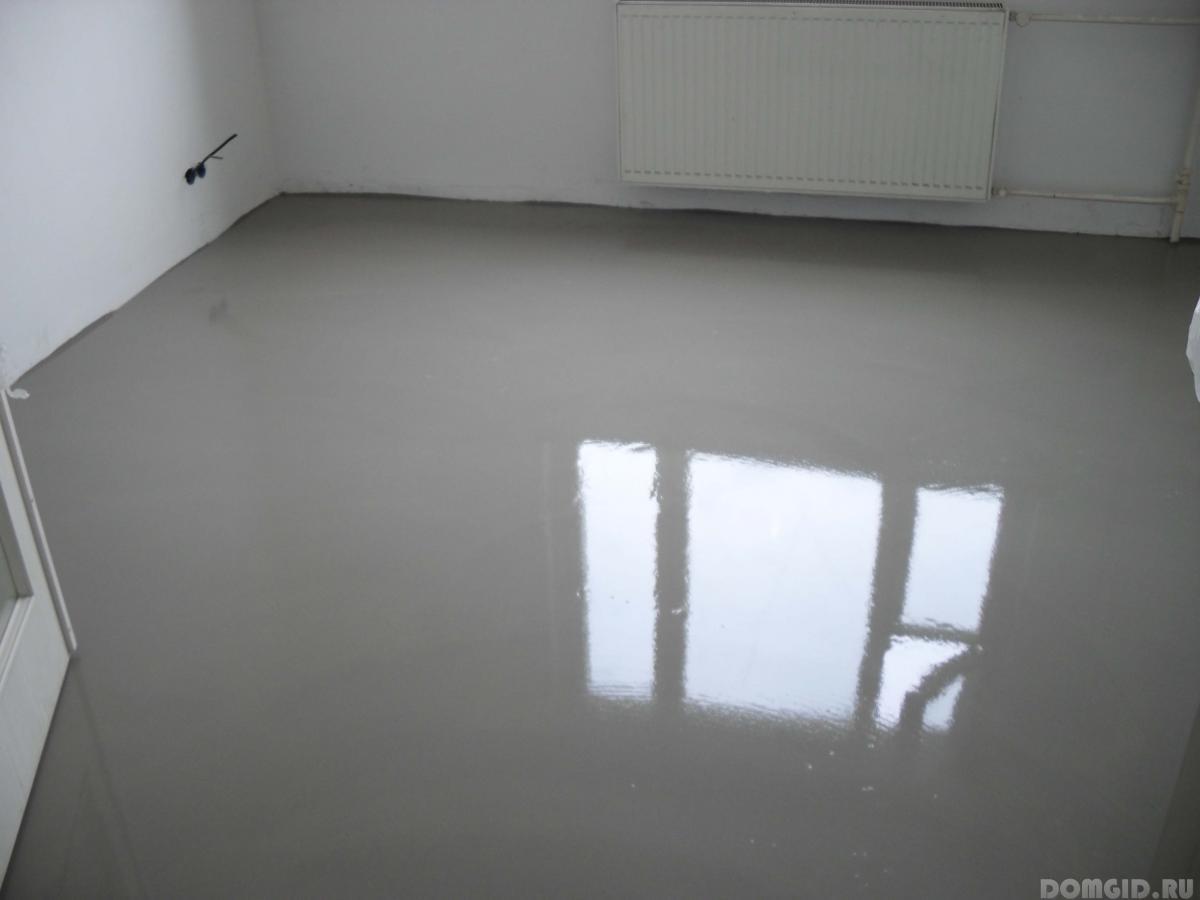
Чтобы наиболее ярко продемонстрировать все плюсы и минусы наливного пола на основе цемента и гипса, а также область его применения, сравним его с более капитальным аналогом – цементно-песчаной стяжкой для пола:
-Толщина слоя: наливные полы используются с целью выравнивания поверхности пола, при условии, что толщина максимального слоя самовыравнивающейся стяжки не будет превышать 3,5 см., допустимый минимальный слой в 3 мм не будет отслаиваться. Хотя, технологии не стоят на месте, а спрос рождает предложение: некоторые производители наливных полов наладили выпуск быстросохнущих стяжек на основе цемента, которые можно заливать слоем до 4 или даже 7см! Но делать это лучше в несколько этапов, несколькими, более тонкими слоями. Цементно-песчаная стяжка разово может быть залита толщиной слоя до 10 см.
-Время изготовления: эксплуатировать наливной пол, например, укладывать на готовую стяжку финишное покрытие, можно уже через 1-3 дня, что, в целом, ускоряет ремонт. А цементно-песчаная стяжка сделанная самостоятельно или купленная в готовом виде, залитая на пол, высыхает полностью и готова к укладке финишного покрытия только через 28 дней.
-Наличие финишного покрытия: наливные полы, а мы говорим наливных полах на цементной и гипсовой основе, предполагают обязательную укладку на них ламината, линолеума, паркетной доски и т.п. из-за их относительной высокой хрупкости и возможности выкрашивания наливных полов при эксплуатации без финишного покрытия. Цементно-песчаная же стяжка может быть использована как самостоятельное покрытие пола, достаточно износостойка, так и основа под финишное половое покрытие. При крупнозернистости цементно-песчаной стяжки, наливные полы на основе гипса или цемента могут выступить промежуточным, подготовительным слоем (создает гладкую поверхность) под финишное покрытие пола.
-Стоимость: наливные полы на основе цемента или гипса значительно дороже, чем магазинный вариант готовой цементно-песчаной (цементной) стяжки. Поэтому, наливной пол расход которого незначительно ниже, а стоимость – выше, чем у смесей для стандартной, так сказать, стяжки пола, целесообразно использовать для нанесения небольшим слоем.
Т.е., наливные полы (на цементной и гипсовой основе) целесообразно использовать, не столько для выравнивания, сколько для быстрого сглаживания незначительных неровностей пола, с последующей укладкой финишного покрытия в жилых и офисных помещениях.
Наливные полы: виды
О видах наливных полов мы уже упомянули, теперь же попробуем систематизировать информацию.
Существует несколько типов наливных полов:
-финишное покрытие – это наливные полы на основе эпоксидных смол и эпоксидных эмалей. Толщина таких полов не может превышать 3,5 см., но сами по себе такие наливные полы – прочное, гладкое, красивое финишное покрытие пола.

-быстротвердеющая стяжка, которая бывает следующих видов:
- цементный наливной пол – это наливной пол на цементной основе с модификаторами, сочетающий в себе достаточную прочность, влагостойкость (можно использовать в помещениях с повышенной влажностью: кухне, санузлах), как у цементной стяжки, и быстроту высыхания, гладкость получаемой поверхности, как у наливных полов на основе полимерных смесей. Цену такого наливного пола нельзя назвать дешевой, хотя, вполне, доступной.
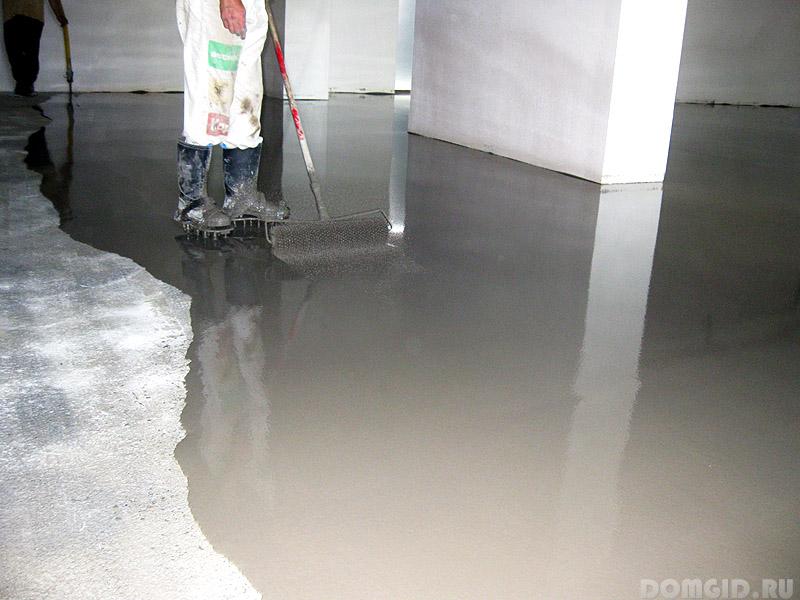
- гипсовый наливной пол – мене влагоустойчив (лучше использовать его в комнатах), рекомендуется для стяжки пола толщиной не более 3 см., достаточно хрупкий, не совместимый с плиточными клеями на цементной основе, но достаточно дешевый и быстросохнущий, если сравнивать с другими видами наливного пола.
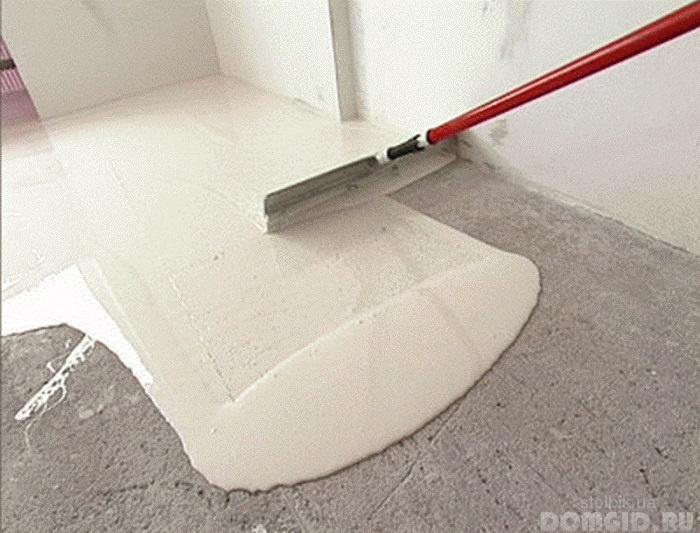
Наливной пол гипсовый или цементный
Выбор наливного пола: на цементной основе или гипсовой он будет, очень индивидуален, хотя общие тенденции все же есть:
-нужны дешевые наливные полы только в комнаты под ламинат или линолеум – берем наливной пол на гипсовой основе.
-нужен универсальный наливной – на всю квартиру, под все виды финишного покрытия,– без наливного пола на цементной основе не обойтись!
Цементный и гипсовый наливной пол: как их сделать правильно
В целом, технология наливного пола для всех видов быстро сохнущих стяжек одинакова.

-очищаем поверхность пола, лучше – пылесосом.
-грунтуем ее, ждем высыхания грунта
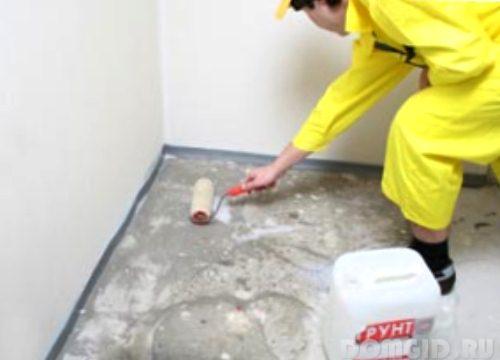
-при толщине слоя, более 1 см., устанавливаем демпферную ленту, при толстом слое стяжки в ванной и кухне можно уложить еще и гидроизоляцию.
-устанавливаем маяки, если это необходимо, слой от 1 см (при минимальном слое наливных полов процесс заливки пола больше похож на его шпаклевание, следовательно, маяки в данном случае – не требуются)
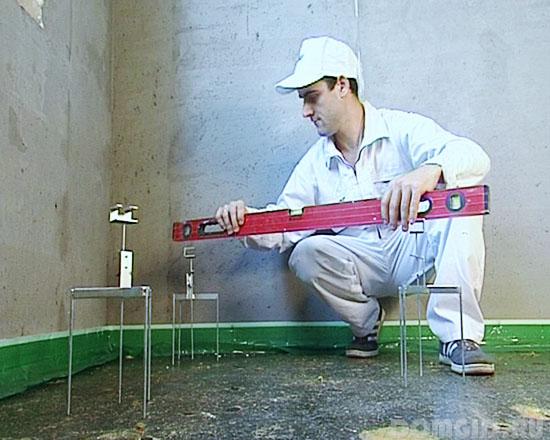
-замешиваем смесь согласно рекомендациям производителя в ведре или автоматических механизмах, типа, бетономешалки
-заливаем полученную смесь: автоматически или вручную.
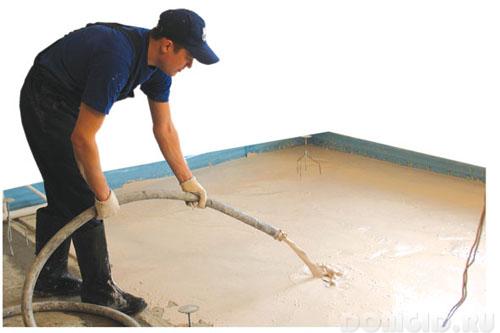
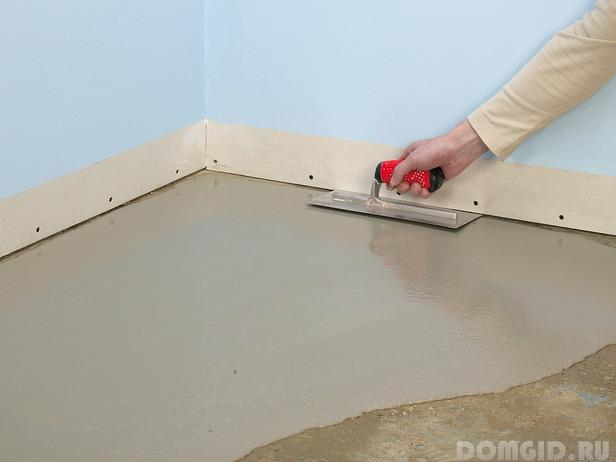
-разравниваем шпателем
-удаляем пузырьки воздуха игольчатым валиком или элементарно – новой чистой щеткой с жесткой щетиной.
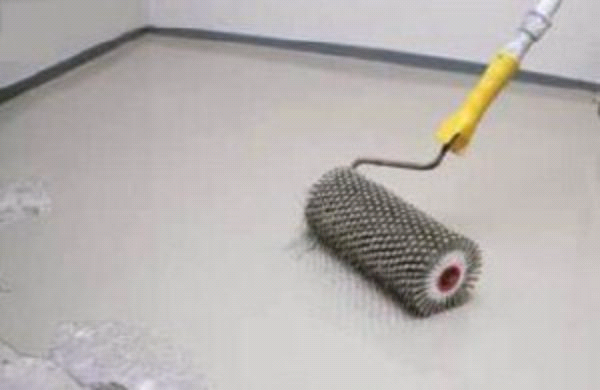
Работаем быстро, т.к. смесь быстросохнущая.
-примерно, через 8 часов начинаем шлифовать поверхность стяжки с целью создания гладкой поверхности пола
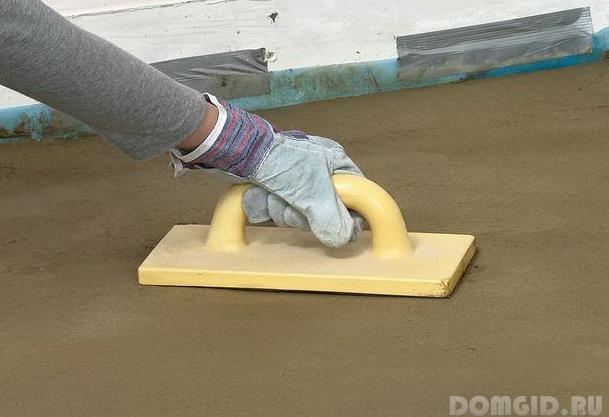
Получаем практически готовую поверхность, по которой можно ходить, хотя. Если есть возможность, лучше выждать сутки.
При учете особенностей применения наливного пола конкретного вида в конкретных условиях, соблюдении технологии и выборе качественной смеси — получится только качественный: ровный и прочный наливной пол.
Source: strgid.ru
Читайте также
Если владельцы решают ремонтировать квартиру своими руками, перед ними встает вопрос выбора материалов для отделки, особенно участков, которые несут постоянные значительные нагрузки. Сюда относится и напольное покрытие. Сделать правильный выбор из многообразия материалов на строительном рынке – задача сложная. Потребительским спросом пользуются материалы, зрительно напоминающие текстуру деревянных покрытий или натурального камня. Яркие представители этой категории – покрытия из ламината и плитка. Так все-таки, что лучше, плитка или ламинат? Ответить на этот вопрос можно, оценив достоинства, недостатки этих материалов и сферу их предпочтительного использования.
Характеристики кафельной плитки
Керамическая плитка с давних времен зарекомендовала себя как надежный и неприхотливый материал, подходящий для укладки в помещениях со значительными эксплуатационными нагрузками.
Эксплуатационные характеристики плитки:
- Долговечность. Это износостойкий материал, способный прослужить более 50 лет.
- Прочность, неприхотливость обслуживания. Если изначально керамическая плитка уложена правильно, то косметический ремонт не требуется. Поверхность очищается от загрязнений простыми способами домашней уборки помещения. Ламинат такими свойствами не обладает.
 Напольное покрытие из плитки на кухне
- Богатый выбор. На строительном рынке представлены образцы плитки, различные по размеру, фактуре и цвету для размещения на кухне и в других помещениях Современные технологии изготовления позволяют нанести на ее поверхность любые рисунки или орнаменты.
- Устойчивость к воздействию влаги. Специальная обработка придает керамической плитке водостойкость. Поэтому керамический материал рекомендован к применению в виде напольного покрытия, для оформления стен помещения кухни, санитарных узлов, прихожих.
- Огнестойкость и неподверженность гниению. Заложены на этапе производства плитки, в которой применен керамический материал.
- Экологическая чистота. Керамическую плитку производят с использованием компонентов натурального сырья. Она безопасна для применения в любом помещении, в том числе на кухне.
 Компоновка плитки
Наряду с отмеченными преимуществами, есть и минусы применения керамической плитки:
- При укладке напольного покрытия стоит учитывать значительный вес плит, что выдвигает дополнительные требования к подготовке основания;
- Монтаж требует мастерства и знания технологии проведения работ, некачественный монтаж, пустоты под керамической плиткой приведут к сокращению срока службы покрытия;
- Возможно частичное разрушение керамической плитки, которое возникает при недобросовестной подготовке надежного основания, нарушениях технологии укладки покрытия или критической нагрузке на отдельную ее часть от падения тяжелых предметов. Вероятность повышена на кухне;
 Разрушение плиточной поверхности
- Скользящая поверхность, что компенсируется своевременным поддержанием чистоты и порядка в помещении кухни, при этом многие производители выпускают материал с противоположными свойствами;
- Тепловая проводимость материала – условный недостаток. При использовании системы отопления «теплый пол» плитка становится комфортной на ощупь.
Характеристики ламината
Ламинат как напольное покрытие в строительстве применяют с середины прошлого века. Ламинированное покрытие быстро заняло достойное место в линейке материалов благодаря своим техническим и эксплуатационным качествам:
- Хорошая тепло- и звукоизоляция. Максимальные показатели достигаются при условии соблюдения технологии укладки (основание из пробкового материала или пенополистирола под ламинат).
- Выносливость ламинированного покрытия к повреждениям, воздействию химических соединений. Нужный уровень прочности подбирают, руководствуясь маркировкой.
 Пол из ламината
- Небольшой вес ламината. Минимизирует нагрузку на основание напольного покрытия, что снижает фактическое время и стоимость проведения предварительных работ.
- Широкой выбор текстур и оформления досок. Позволяет создать любой дизайн в помещении, от ультрасовременного до прованса.
- Минимальные требования к мастерству при монтаже ламината. Собрать можно полы можно самостоятельно с малыми затратами времени. При этом не обязательно наличие опыта проведения таких работ.
- Экологическая чистота ламината, декларируемая производителем, представляется несколько условной. Технология производства ламината предполагает использование пластиковых компонентов. Но санитарные нормы, принятые в стране, соблюдаются в полной мере.
- Стоимость ламината и сопровождающих компонентов доступна и соответствует качеству.
Минусы применения ламинированного покрытия:
- Чувствительность материала к воздействию влаги. Однако производители в подавляющем большинстве принимают меры к увеличению влагостойкости продукции, особенно в экземплярах ламината с классом выше 32;
 Пол из ламината в стиле винтаж
- Шумность ламината при эксплуатации характеризуется возникновением громких звуков при перемещении по поверхности покрытия, падении предметов;
- Требования к подготовке основания для укладки ламината: тщательное выравнивание поверхности, использование специальных подложек для обеспечения правильной работы замковых устройств и продления срока эксплуатации;
- Относительно короткий срок эксплуатации ламината, который не превышает 25 лет;
- Особенности ухода за поверхностью ламината обусловлены показателем влагостойкости материала, методика обработки имеет технологические особенности.
Варианты использования материалов
Оценив качественные характеристики напольных покрытий из ламината и плитки, приходим к выводу, что они имеют определенные особенности при проведении монтажа и дальнейшем использовании. Однозначным является требования к подготовке основания, при этом использование плитки в некоторой степени допускает погрешности поверхности, устраняемые в ходе монтажа на клеящий состав. Подготовка же основания для ламината такой возможности не дает.
Ламинат – «теплый» материал. По холодной плитке ходить не всегда комфортно. Уравнивает шансы установка водяного или электрического «теплого пола». Возникает вопрос: что лучше подойдет на теплый пол, ламинат или плитка? Практика показывает, что оба типа напольного покрытия приемлемы для установки такого оборудования. При размещении ламината для улучшения свойств тепловой проводимости используют изделие толщиной не более 10.0 мм с высокой степенью защищенности от влаги (класс не ниже 32). Свойства теплоотдачи кафельной плитки позволяют использовать ее без ограничений.
Важно! При выборе ламината как основного покрытия системы «теплый пол» рекомендуется внимательно ознакомиться с маркировкой. Отдельные образцы, из-за технологических особенностей, для таких целей неприменимы.
При проведении ремонта в ванных комнатах, санитарных узлах, кухне применяют плитку. Выбор обусловлен повышенной влажностью помещений, исключению возможных последствий в результате прорыва питающих водой труб или стоков на кухне или в туалете. Плитка обеспечивает надежную защиту перекрытий кухни или ванной и быстрое приведение помещения в рабочее состояние.
Кухня, помимо этого, представляет собой помещение с высокой вероятностью попадания на пол жирных жидкостей, брызг и сопутствующих приготовлению пищи компонентов заготовок. Плитка упрощает поддержание надлежащего санитарного состояния на кухне. В то же время, при организации пространства кухни-студии, возможно разграничение рабочей и части для приема пищи с применением композиции из плитки и ламината.
 Комбинирование материалов
Ламинат прекрасно подходит для оформления спальных, гостиных комнат, коридоров и кабинетов. Его текстура и многообразие расцветок позволяют использовать данный материал при создании любого по сложности интерьера в предпочитаемом владельцем стиле.
Напольное покрытие подбирают, руководствуясь свойствами материала и целесообразностью его использования в том или ином помещении (в кухне и кабинете укладывают разные полы). Важную роль играет построение интерьера с гармоничным использованием всех элементов. Значение имеет и стоимость выбранного материала.
Современный ламинат высокого класса защиты приближен по свойствам к кафельной плитке, но относится к категории дорогостоящих. Плитка в отдельных помещениях смотрится неэстетично, однако вполне допустимо использование принципа зонирования помещений разными типами напольных покрытий. В итоге выбор остается за хозяином квартиры.
В представленном ниже видеоматериале приводится пример укладки ламинированного напольного покрытия.
Видео 1. Монтаж ламинированного напольного покрытия
Вконтакте
Google+
Средняя оценка оценок более 0 Поделиться ссылкой 90000 Engineered Hardwood vs Tile Flooring 90001 90002 A common question renovations or builders consider when they are planning a flooring project: 90003 engineered hardwood or tile flooring? 90004 90005 90002 Whether you are looking primarily at cost or considering only design elements; that question can be an immense consideration for many different reasons. This article will take an in-depth look at 90007 both flooring options 90008, in the hopes of offering an impartial view for consideration.90005 90002 In this exposé, we will consider both products and weigh the 90003 pros and cons 90004 of each product, while we look into the different options engineered hardwood and tile flooring afford the consumer. 90005 90002 90003 In this guide, we’ll explore: 90004 90005 90018 Side-by-Side Comparison 90019 90020 90021 90022 90023 90024 90023 Engineered Hardwood 90024 90023 Tile 90024 90029 90030 90031 90022 90033 Origin 90034 90033 Man-made — First manufactured in the 1960’s 90034 90033 Man-made — First manufactured in ancient times 90034 90029 90022 90033 Ingredients / Composition 90034 90033 Thin layers of manufactured wood (plywood plus high-density or medium-density fiber-wood) soft or hard plywood inner core glued and pressed together in a criss-cross fashion with a thicker hardwood veneer layer.90034 90033 Thin layers of clay molded and let dry (for ceramic and terracotta) or baked to ensure dryness; glazed and baked to create porcelain; or cut from mineral and stone deposits. 90034 90029 90022 90033 Design Options 90034 90033 Dozens of wood styles and finishes. Different board widths, and parket styles. Dozens of color styles. 90034 90033 Unlimited. 90034 90029 90022 90033 Durability 90034 90033 Can show surface scratches. Can absorb moisture and warp or cup. 90034 90033 Can crack and chip under harsh conditions.90034 90029 90022 90033 Waterproof / Water Resistant 90034 90033 More water resistant than hardwood, but still made from wood so will absorb moisture and can become saturated, or grow mould. 90034 90033 Water resistant used in pools and bath houses. 90034 90029 90022 90033 Cleaning 90034 90033 Industrial cleaners can remove finish. Standing water can harm flooring. Dry sweeping and damp mopping when necessary. 90034 90033 Dry sweep and dry or wet mop cleaning. 90034 90029 90022 90033 Stain Resistant 90034 90033 Different wood species used in engineered hardwood can be somewhat stain resistant if the wood’s protective finish is entact.However liquids or other staining substances may stain the wood if left unattended for a length of time. 90034 90033 Most tile is stain resistant, and if the tile and grout has been sealed, most industrial strength cleaners can be used to remove staining. 90034 90029 90022 90033 Longevity 90034 90033 Average lifespan manufacturers suggest is 100 years, since it has only been around for going on 60 years, lifespan is yet unknown. 90034 90033 Some tile lifespan is said to be over 2000 years, so longevity is so-far timeless.90034 90029 90022 90033 Pet-Friendly 90034 90033 Surface scratches from pets — several comments from customers. Manufacturers state the flooring consumer purchased was not a high enough standard to not be affected by pets running on the surface and creating «nail strikes». Consumers advised to purchase and install higher quality engineered hardwood. 90034 90033 With the exception of glazed tile, most tile flooring is pet-friendly and does not show scratches from nail-strikes. 90034 90029 90022 90033 Environmentally-Friendly 90034 90033 Uses less «prize» wood than traditional hardwood.Can be sanded down and refinished two or three times over the lifetime of the product. 90034 90033 Ceramic, porcelain and terracotta tile are eco-friendly because no natural ingrediants are used. Stone and mineral tiles are less eco-friendly in the sense that they use deposits. But are eco-friendly in the sense that they can last several lifetimes before they have to be replaced. 90034 90029 90022 90033 Installation Challenges 90034 90033 Moisture is an issue, but less than hardwood. 90034 90033 Messy during installation, but can be installed anywhere.90034 90029 90022 90033 Installation Surfaces 90034 90033 Any flat, hard and level surface (can be installed over cement as long as the cement has less than 4% moisture) 90034 90033 Can be installed over any surface as long as the surface is level and hard. After installation and sealing moisture is not relevant. 90034 90029 90022 90033 Heat Transfer 90034 90033 High heat transfer ability and can be installed over radiant in-floor heating 90034 90033 Cold, but can be installed over in-floor radiant heating systems 90034 90029 90022 90033 Manufacturers 90034 90033 Owens Plank Flooring, Vintage Solid Sawn, Vintage Northern Solid Sawn, Somerset Engineered Collection 90034 90033 AlysEdwards Tile & Stone, American Olean, Arto Brick, Crossville, Daltile, Eleganza, Emser Tile, Interceramic 90034 90029 90022 90033 Purchasing Options 90034 90033 Specialty Flooring Shops and Big Box Stores — Lowes and Home Depot 90034 90033 Specialty Flooring Shops and Big Box Stores — Lowes and Home Depot 90034 90029 90022 90033 Other Drawbacks 90034 90033 Cheaper flooring has a thinner «wear layer» which is the layer using the «prize» wood.Poorer quality flooring manufacturers are mostly in China. 90034 90033 Messy install, and cold flooring. Warm tile options are vinyl and leather — not spotlighted in the article. 90034 90029 90022 90033 Flooring Guide 90034 90033 Engineered Hardwood Flooring Guide 90034 90033 Tile Flooring Guide 90034 90029 90168 90169 90018 Engineered Hardwood Flooring 90019 90002 This is a 90003 man-made product 90004 consisting of layered wood in a crossed fashion and held together by epoxies and adhesives, then pressed under tremendous pressure and heat.The 90003 top layer 90004 of engineered hardwood is a thick hardwood — veneer stained and sealed. 90005 90002 The core of the engineered hardwood consists of other wood materials pressed in layers. The core can contain up to ten different plywood and pressed composite wood layers. Layers have the wood grain laid perpendicular layer, by layer. 90005 90002 The cores of the engineered hardwood planks are designed in such a way that the layers deter twisting because of the opposing grain placement.90005 90002 Engineered hardwood, like real hardwood, comes in 90007 many different hardness types, thickness types, and colors 90008. Among the common hardwoods available are 90003 walnut, hickory, oak, maple, and bamboo. 90004 90005 90002 Bamboo is available only in an engineered hardwood as bamboo is not available in a full hardwood plank flooring. 90005 90002 Back to Top 90005 90018 Tile Flooring 90019 90002 This is also a 90003 man-made product. 90004 Made of thin slabs of clay, tile products date back to the construction of man’s earliest buildings.Tile is available in many base materials and may come in a 90003 glazed or unglazed finish. 90004 90005 90002 It is available in porcelain, ceramic, terracotta, and stone. In addition to the types of tile flooring available, tile comes in different hardness options. Porcelain tile comes in 90003 six tile types 90004: matte or unglazed; glazed; polished; double charged; full body; and textured or stone finish. 90005 90002 Ceramic tile is offered in 90003 hardness ratings from zero to five, 90004 where zero through two hardness are great for wall tile applications; three hardness is optimal for most residential applications; finally, four and five hardness are the correct hardness for commercial flooring applications.90005 90002 You can custom create this flooring in different styles to resemble wood grain and other hardwood styles. You can even mold it to resemble hammered copper tile. 90005 90002 Back to Top 90005 90018 Nature’s Tile 90019 90002 Tile flooring is also available in 90003 natural marble, slate, sandstone, and granite 90004, to name a few. Mineral and stone materials such as marble and slate tiles are not man-made but rather man-finished. Cut from mineral and stone deposits; these materials are then finished into tile through cut and polish.90005 90002 Back to Top 90005 90018 Leather and Vinyl Tile 90019 90002 Tile flooring has «warm» options available for the consumer. For this article, I have only made comparisons to only include «cold» flooring tiles. Vinyl, leather and other «warm» flooring tile options will be a topic for another time. 90005 90002 Back to Top 90005 90018 Similarities Between Flooring Types 90019 90002 Both engineered hardwood and tile flooring options are available at most flooring specialty shops and renovation outlets, as well as big box stores such as Home Depot and Lowe’s.Both options can be 90003 purchased as inexpensively as $ 2 per square foot 90004 and higher. 90005 90002 Back to Top 90005 90018 From the Experts 90019 90002 Flooring and renovation experts have different views when it comes to which product is the best for both 90007 new construction and renovation 90008 flooring products. However, every expert will advise a client to research each product before deciding on which product is best for their use. 90005 90002 Looking at a few various styles of 90003 engineered hardwood flooring 90004, a consumer would note that each has a timeless essence and promotes a 90007 warm and inviting feeling 90008.Equally, to most renovators and builders, 90003 marble or porcelain tile flooring 90004 is rich and elegant and can look as timeless and classic. 90005 90002 Back to Top 90005 90018 Advantages & Disadvantages 90019 90002 Both tile and engineered flooring have their advantages and disadvantages. Let’s look at the many benefits and the difficulties of engineered hardwood. After that, we will look at the pros and cons of tile flooring. 90005 90002 After reviewing many articles and comparisons, and following manufacturer site product comments and other various professional and personal views, I have noted something.Consumers who have installed engineered flooring either personally or had a professional flooring installer come in have 90007 excellent things to say 90008 about their engineered hardwood flooring. 90005 90002 Back to Top 90005 90018 The History of Engineered Hardwood 90019 90002 Engineered hardwood was first invented and manufactured in the 1960s. Since its invention, manufacturers have made many advancements in both quality and finish of the product. The performance of the product alone has advanced tremendously.90005 90002 In the 90003 1960s 90004, engineered hardwood was known as 90003 «brittle» 90004. Therefore, it was difficult to install without the product easily chipping away. Today’s performance shows engineered hardwood to be strong and durable without that same «brittle» texture. 90005 90002 When manufacturers first produced it, engineered hardwood was known for an issue called 90003 «off-gassing» 90004 — the odor produced by the toxins in the resin and adhesives, pressed into the wood and also found in the stains and topcoats of engineered hardwood .Today, manufacturers maintain that most engineered hardwood does not off-gas, but it is always something consumers should research for themselves by 90007 contacting the manufacturer and assessing their green initiatives. 90008 90005 90002 When it comes to the appearance of engineered hardwood, in the 60s the product had only two or three finish options, whereas today’s engineered hardwood comes in 90003 dozens of wood species 90004, colors, surface effects, and plank widths. 90005 90002 Back to Top 90005 90018 Advantages of Engineered Hardwood 90019 90002 Let’s start by assessing the consensus of 90003 benefits of engineered hardwood flooring: 90004 90005 90288 90289 90290 Eco-Friendly 90291 — Engineered hardwood requires less «prize wood» and thus helps to conserve the forests all over the world.While hardwood flooring is made from solid «prize wood» wood planks, engineered hardwood has a core made from layers of plywood and includes a top layer of «prize wood.» Considering the difference: engineered hardwood flooring is between 90003 3/8 «to ¾» thick 90004, of layered wood; solid hardwood planks are between ½ «to ¾» of «prize wood.» Engineered hardwood uses less «prize-wood» per plank and is, therefore, more eco-friendly. 90294 90289 90290 Sustainability 90291 — Engineered hardwood flooring (like hardwood flooring) can 90007 last several lifetimes.90008 Most engineered hardwood flooring consists of a thick top layer of wood, which can be sanded down and refinished many times. Customers should ask suppliers to ensure the supplier provides a product which has a 90003 thick top wood layer 90004. Some inexpensive products do not have a thick top wood layer, which in turn would prohibit sanding and refinishing more than two or three times over the lifetime of the product. 90294 90289 90290 Moisture Vulnerability 90291 — Like hardwood flooring, engineered hardwood flooring is made from wood, which still makes it vulnerable to moisture.However, unlike hardwood flooring, engineered hardwood flooring has been explicitly manufactured to 90007 resist moisture 90008. Manufacturers maintain that engineered hardwood construction processes include enough heat and pressure force to limit the room for moisture. That is not to say that it can not become ruined by access moisture or by flooding. 90294 90289 90290 Installation Over Concrete 90291 — As with any installation, engineered hardwood still has manufacturer’s recommendations when installing over a concrete slab.Moisture in the concrete must be 90003 less than 4% 90004 before an engineered hardwood should be installed over concrete. Though it may seem obvious, many customer issues noted in my research revolved around engineered hardwood flooring mounted on top of a concrete slab not previously dried to less than 4% moisture. As a result, the moisture from the concrete slab became absorbed by the engineered hardwood, which in turn, caused the engineered hardwood to buckle and cup. 90294 90289 90290 Easy-Care 90291 — Well-maintained engineered hardwood flooring should only ever require 90003 hardwood vacuuming 90004, 90003 soft-cloth sweeping and washing.90004 It should never require wet-mop washing. If a liquid is spilled on engineered hardwood flooring, you should never use a wet mop and bucket to clean the floor. All liquids should be absorbed quickly with towels or paper towels to ensure the liquid does not have a chance to the seep into the flooring. Although the surface time is longer for liquids to absorb into engineered hardwood, in comparison to hardwood planks; both are still wood products, and fluids will eventually seep into them. 90294 90323 90002 One of the secondary qualities consumers found with engineered hardwood is that the 90007 heat transfer ratio was outstanding 90008, and consumers found the flooring to be a warm medium.Because engineered hardwood is a stable medium, you can custom order it in wider board widths. You can order some planks up to 90003 10 «wide. 90004 90005 90002 Another advantage with engineered hardwood is the 90007 range of ways you can install the flooring. 90008 90003 Floating 90004 engineered hardwood is an appropriate option for consumers with level subflooring. Other installation types for engineered hardwood include 90003 glue-down or nail-down options. 90004 90005 90002 Back to Top 90005 90018 Radiant Heating and Engineered Hardwood Flooring 90019 90002 You can install in-floor, radiant heating systems in a flooring area prior to engineered hardwood flooring installation.You can install engineered hardwood on any flooring surface, so long as the surface is secured well, flat and hard. 90005 90002 Back to Top 90005 90018 External Applications for Engineered Hardwood 90019 90002 You can also use engineered hardwood in external applications such as decks, if the application area offers 90007 decent drainage 90008 and the decking is 90007 not in a predominantly wet climate 90008. You can use engineered hardwood as outdoor decking anywhere you would use normal hardwood planks.90005 90002 Back to Top 90005 90018 Engineered Hardwood Complaints 90019 90002 I came across 90003 only two major complaints 90004 about engineered hardwood during my research: 90005 90288 90289 The first complaint I encountered was various consumers stating how their engineered hardwood flooring 90003 faded 90004 in spots where the daily direct sunlight hit the flooring. 90294 90323 90288 90289 The second complaint I encountered was various customers stating that their engineered hardwood flooring showed 90003 scratches from pets 90004 or shoes.One customer even stated that scratches from practicing the «foxtrot» showed up on her flooring after the first time she and her partner danced on the floor. 90294 90323 90002 I looked to the manufacturer’s comments for solutions for these issues. There, I discovered manufacturers recommending that customers look into the quality of the product the customers had purchased. I can only recommend that consumers looking to install engineered hardwood in their home, first look into the 90007 quality of the layers 90008 of the engineered hardwood and also follow any manufacturer’s recommendations for use.90005 90002 My research showed that there are differences in manufacturer specs. Some layers of the plywood used in the construction can be made from soft woods, while others are made from hardwoods. With this in mind, it is up to the consumer to choose the right flooring composition for the project. 90005 90002 As with engineered hardwood, my research into tile flooring yielded 90003 many pros and few cons. 90004 90005 90002 Back to Top 90005 90018 Advantages of Tile Flooring 90019 90002 Consumers realize that as with wood flooring, tile flooring is a great selling feature for homes on the market.I even came across many consumers who described ceramic tile flooring as being «the most 90003 versatile 90004 flooring product on the market, with applications for use in every building or renovation project.» High praise, indeed; I found that research into tile flooring supported this praise. 90005 90288 90289 90290 Longevity 90291 — If you were to visit the Isle of Pompeii, you would view many fantastic ceramic tile sites, which are still in near perfect condition, even after almost 2,000 years.People have made various and similar other tile discoveries in China, Mongolia, Italy, Rome, and England dating back hundreds and even thousands of years. People consider tile — virtually any type — to be 90003 timeless. 90004 Glazed tile is both 90003 stain- and water-resistant 90004. Unglazed tile requires sealant to become stain and water resistant, which in turn, improves the tile’s longevity. Terracotta tile is one of the oldest forms of tile in existence, yet it is still a leading tile style people use in floor construction today.90294 90323 90288 90289 90290 Versatility 90291 — From my research, I have found that tile is the only flooring type that people can install almost anywhere. You can install it in every room of a house. People use it in 90007 practically every commercial application 90008. You can install this flooring in high traffic areas, high humidity areas, cold climates, warm climates and every area or climate in between. 90294 90323 90288 90289 90290 Water-Resistant 90291 — When you properly seal, dry and install unglazed tile, glazed tile and sealed grout, they become water-resistant.People have used tiles to surface swimming pools and bathhouses dating back to the times of the Greek and Roman Empire rule. 90294 90323 90288 90289 90290 Easy Maintenance 90291 — When the grout and unglazed tile surface are sealed, maintenance of a tile floor should consist of 90007 sweeping or vacuuming with a tile vacuum, or a soft brush and damp-mopping the surface 90008. If stains should happen to set into the tile surface, most home and industrial tile cleaning products will clear the stain without damaging the tile surface.As in the case of a glazed tile, you must seal only the grout to keep out water and dirt, because of the glazed tile’s special treatment (glazing) during manufacture. 90294 90323 90288 90289 90290 Designability 90291 — Unlike every other flooring style, only the designers dreams limit tile flooring’s design. Custom creations have been in production since tile was first manufactured and from the days where 90003 kings and pharaohs 90004 have had their masons create their every design desire.Today, manufacturers carve tiles out of marble slabs in different shapes, both small and large. They make ceramic and porcelain tiles in molds which resemble wood planks etched with the wood’s grain, or in molds which have icon shapes etched in the surface. The manufacturer can make molds to look like stone with all different sizes of pebble curves. They can also make tiles look like small parts of a greater picture, like water tumbling over a mountain cliff or pieces of a grand mosaic. 90294 90323 90002 Back to Top 90005 90018 The History of Tile Flooring 90019 90002 As mentioned, people have produced tile flooring as far back into history as the recorded word.As ancient kings and pharaohs had the masons of the time produce many tile masterpieces for both floor applications and wall applications. 90005 90002 Through the ages, tile has represented prestige and wealth. However, in this day and age, tile flooring is a common application available to all classes, because tile flooring can be an 90003 inexpensive flooring option 90004, or it can be an indication of wealth and prestige by the use of 90003 more expensive 90004 tiling materials or more expensive molds and custom cuts of natural stone and minerals.90005 90002 Back to Top 90005 90018 Disadvantages of Tile Flooring 90019 90002 During my research adventure, I discovered only a couple «downsides» to installing tile flooring. Other than the mess during installation, the only other main drawback to tile flooring I came across happened to be the 90003 temperature 90004 of the product. 90005 90002 Tile flooring is «cold». However, you could easily install tile over in-floor radiant heating. Given this easy fix, can we even call the temperature of tile flooring a «drawback?» I will leave that assessment to the consumer.90005 90002 Back to Top 90005 90018 Flooring Conclusions 90019 90002 Like almost every consumer product, buyers need to research the exact product they intend to install when it comes to flooring. Only your project designer can decide whether your project calls for 90003 engineered hardwood or porcelain tile 90004. 90005 90002 Your research should include not only color, texture and width of the engineered hardwood or the size of the ceramic tile. It should also include the manufacture of the product in addition to the cost per square foot.90005 90002 No two design projects will be the same. Every consumer should be aware of the goal they are fulfilling when they choose the project’s flooring type. By defining and establishing 90003 your project’s flooring goal 90004, and keeping in mind the limitations or special requirements of the type of flooring you intend to install, your flooring project is sure to become the solid footing you want it to be. 90005 90002 Back to Top 90005 90470 90002 About Lori Hamm 90005 90002 I have been writing in one form or another since I was 11 years old and won my first national poetry contest.Now, at almost a half century young, I have over 200 published poems to my name and at least as many feature articles created and published in the last few years. 90005 .90000 Laminate vs Tile Flooring | 2020 Comparison, Pros & Cons 90001 90002 Today we’ll help you come to a decision on whether you should 90003 install tile vs. laminate. 90004 90005 90002 I’ve installed all types of floor coverings over my 6 years as a contractor in the industry. You name it, I’ve installed it. 90005 90002 In this business, many people I meet ask the same question: «Should I install tile or laminate?» 90005 90002 I’m going to clear things up today. We’ll compare various factors that you can use to make your decision.90005 90002 90003 In this guide, we’ll explore: 90004 90005 90016 Side-by-Side Comparison 90017 90018 90019 90020 90021 90022 90021 Laminate 90022 90021 Tile 90022 90027 90028 90029 90020 90031 Installation 90032 90031 Floating Installation, Easy to Remove 90032 90031 Permanently Attached, Difficult to Remove 90032 90027 90020 90031 Waterproof 90032 90031 Water Resistant up to 24hrs 90032 90031 Yes. When sealed properly Tile is Waterproof 90032 90027 90020 90031 Durability 90032 90031 Scratch Resistant, Water Resistant, Pet Friendly 90032 90031 Scratch Resistant, Waterproof, Pet Friendly 90032 90027 90020 90031 Maintenance 90032 90031 Easy Cleaning, Low Maintenance 90032 90031 Difficult to Clean Grout, Easy to Clean the floor 90032 90027 90020 90031 Repairs 90032 90031 Difficult to repair because of the installation process 90032 90031 Easy repairs 90032 90027 90020 90031 Demolition Cost 90032 90031 Low cost for removal, DIY Project 90032 90031 Extremely expensive, Not recommended DIY 90032 90027 90020 90031 Resale Value 90032 90031 Low End 90032 90031 High End 90032 90027 90020 90031 Lifespan 90032 90031 15-25 Years 90032 90031 75-100 Years 90032 90027 90020 90031 Reclaimable 90032 90031 If removed carefully it can be reused or resold 90032 90031 No tile can not be reused or resold 90032 90027 90020 90031 Flooring Guide 90032 90031 Laminate Flooring Guide 90032 90031 Tile Flooring Guide 90032 90027 90110 90111 90016 Installation 90017 90002 When it comes to installation, laminate is the easiest.It is installed on top of a 90003 vapor barrier. 90004 This barrier is laid down to protect the underside of the laminate from moisture. 90005 90002 Laminate is installed with a 90003 tongue and groove locking system 90004 that can easily be connected with a mallet and tapping block. It’s not heavy and installs fairly quickly once you get the hang of it. A homeowner is capable of doing this project as long as they can 90121 read a tape measure and operate a table saw. 90122 90005 90002 It does not take a lot of skills or tools to do a small project on your own.You could even do a whole house by yourself if you were committed. We’ll list some tools you might need if you want to try to tackle this project on your own. 90005 90126 90127 90003 Table Saw 90004 90130 90127 90003 Tape Measure 90004 90130 90127 90003 Square 90004 90130 90127 90003 Pencil 90004 90130 90127 90003 Mallet 90004 90130 90127 90003 Tapping Block 90004 90130 90127 90003 Tapping Bar 90004 90130 90127 90003 Razor Knife 90004 90130 90127 90003 Door Jamb Cutter 90004 90130 90163 90002 Tile installation, on the other hand, requires a bit more work.It also requires a certain level of patience and skill. A homeowner may choose to tackle a project on their own, but should note that tile installation 90121 requires specialty tools 90122 to be completed properly. 90005 90002 Tile is installed on top of a mortar bed and becomes 90003 permanently attached to your foundation 90004. When installing tile, you use spacers, ranging from 90003 1/16 inch to 1/4 inch 90004. This is used to create a valley between the two tiles which is then filled with a grout color of your choice to complete your project.90005 90002 In my opinion, any tile installation is better left to the pros. It is labor-intensive, messy, and requires a minimum of 2 days to complete even the smallest project. On top of that, there are a bunch of tools you will need to complete this type of installation which we’ll list for you below. 90005 90126 90127 90003 Wet Saw 90004 90130 90127 90003 Grinder 90004 90130 90127 90003 Tile Breaker 90004 90130 90127 90003 Margin Trowel 90004 90130 90127 90003 ½ Flooring Trowel 90004 90130 90127 90003 Mud Mixer 90004 90130 90127 90003 Buckets 90004 90130 90127 90003 Sponges 90004 90130 90127 90003 Spacers or Clips & Wedges 90004 90130 90127 90003 Tape Measure 90004 90130 90127 90003 Square 90004 90130 90127 90003 Pencil 90004 90130 90127 90003 Razor Knife 90004 90130 90127 90003 Door Jamb Cutter 90004 90130 90127 90003 Level 90004 90130 90127 90003 Laser 90004 90130 90163 90002 Back to Top 90005 90016 Appearance 90017 90002 Laminate is a beautiful product to install.Laminate comes in a variety of different colors and sizes. It locks together for a 90003 tight seal 90004 and 90121 makes cleaning up your floors a breeze. 90122 90005 90002 Laminate is one of the best choices for your home when it comes to appearance. It’s comfortable on the feet when walking around barefoot and unlike tile, you will not stub your toes on any lips caused by improper installation. 90005 90002 Tile is also a great product to install when it comes to 90003 appearance 90004.Tile has been around for decades and comes in many different colors, shapes, sizes and materials. When it comes to choosing which tile is right for your home, 90121 your options are almost endless. 90122 90005 90002 Tile is permanently attached to your foundation and is not separated by a vapor barrier or an insulation barrier like laminate. This causes your feet to get cold as you can feel the temperature from the foundation transfer through to the tile. Some people choose to put area rugs in spots where they would normally hang out on their floor, like a living room or an office.90005 90002 Back to Top 90005 90016 Durability 90017 90002 When it comes to durability, 90121 tile is the winner 90122. When you install tile correctly, it is almost impenetrable. 90005 90002 You should install tile with a 90003 layer of mud on the floor and on the back of it 90004. This helps the Tile fully adhere to the floor which creates a suction-like system that makes removal of the tile very difficult once applied. 90005 90002 People think tile is 100% waterproof. That is false.Tile and grout are porous, which means that after so much time water will seep through your tile, into your thinset and on to your concrete. This creates moisture underneath your tile that, over time, will slowly soften up your thinset and pop your tiles right out of the mud. 90005 90002 Why do you think people have problems with their tile showers 6 months down the road? It happens because the 90121 tile and grout is porous and the water seeps through. 90122 You must 90003 seal tile 90004 to prevent staining and water damage.90005 90002 Laminate, on the other hand, is not as durable as tile, but it is a durable product. Some manufacturers have designed laminate to be 90121 scratch-resistant, water-resistant, and weather-resistant. 90122 This means that you can install laminate almost anywhere in your home. 90005 90002 You can not install laminate in a shower, but you can install it in bathrooms. Laminate is a great product, in my opinion. I recommend that all of my customers consider this option because it is 90003 almost as durable as tile, and cheaper.90004 90005 90002 Back to Top 90005 90016 Maintenance 90017 90002 Maintaining your laminate is probably one of the easiest things to do. Laminate has no grout lines which makes 90121 sweeping or vacuuming your laminate floors hassle-free 90122. No more dirt getting stuck in those grout lines. 90005 90002 You can 90003 sweep and mop your laminate 90004 as long as you do not use too much water, but you should use a Swiffer WetJet to do this task as it is designed to spray an even coat of cleaning solution and wipes up dirt immediately with the dry cloth.It’s never been easier to clean floors. 90005 90002 Tile is a pain to maintain, in my opinion. Tile has grout lines that tend to catch a lot of dust and grime, which is why grout lines change color over time. 90005 90002 You will have to clean your grout lines monthly to keep them looking new. Keep in mind, you will have to 90121 use a toothbrush 90122 to clean the lines. 90005 90002 You can sweep, vacuum and mop tile with no issues. Unlike laminate, 90003 tile is almost impervious to spilled water 90004 and can hold water for some time before it starts to seep through the grout lines, under your floor.90005 90002 Back to Top 90005 90016 Repairs 90017 90002 Repairing tile is 90121 way easier 90122 than repairing laminate. You install tile in individual pieces and grout it together to create a complete floor. 90005 90002 That means if you want to replace a tile that’s chipped or cracked, you can easily do so by breaking out the one tile, replacing it, and re-grouting the area. 90005 90002 Laminate, however, is a totally different story. 90003 You install laminate wall to wall. 90004 Then, you interlock every piece together from the sides and lips.90005 90002 If you had a piece of laminate that somehow got damaged in the middle of your living room, you would have to start by removing the laminate at the closest wall and all the way back to the damaged piece. 90005 90002 This would mean if you had one damaged piece of laminate in a bad spot, you would have to take out 90121 half your floor 90122 to repair it. You can not cut a piece of laminate out from the middle of your floor and slap a new one in. If you’re looking for 90003 easy repairs 90004, 90121 tile is your best bet.90122 90005 90002 Back to Top 90005 90016 Demolition 90017 90002 I think everyone forgets about the long term when they are choosing flooring. Everyone seems so caught up in the installation cost that they never really think about the 90003 demolition cost. 90004 90005 90002 Tile is probably 90121 one of the most expensive floorings to remove 90122. When removing tile, you need a 90003 pneumatic jackhammer 90004 to bust the tiles out of the mortar and a mortar scraper to get all the mortar off of the concrete.This will also 90121 tear up your concrete 90122 and you might even need a patch job depending on what kind of flooring your replacing it with. 90005 90002 Tile demolition is expensive, especially if you have furniture in your home. Tile demolition is loud and dusty. You will need to empty or wrap your whole house prior to demolition. 90005 90002 Laminate, on the other hand, is a breeze. All it takes to tear up some laminate is some muscle. 90005 90002 You can start at one wall and unsnap all the pieces of laminate in the whole house within a couple hours.If you take your time, you can also 90003 save the laminate for resale 90004. As long as it is still in good condition you can sell it to offset the cost of your new floors. 90005 90002 Back to Top 90005 90016 Resale Value 90017 90002 Which flooring provides the highest resale value? That’s an easy one. 90005 90002 Tile will bring you the most value compared to laminate. Tile is 90121 lavish, beautiful, and elegant 90122. It’s tremendously attractive and people tend to like it because of the 90121 long-lasting quality 90122 they can expect from it.90005 90002 Laminate, on the other hand, brings in very little resale value down here in Florida. People tend to look at laminate as a cheaper alternative to hardwood and normally frown upon the longevity of it. Honestly, laminate has had a bad reputation over the years, but it has come full circle. 90005 90002 Manufactures have re-designed and re-engineered laminate to be 90003 more durable and water-resistant, 90004 which in my opinion qualifies it to bring in some 90003 resale value to your home 90004.You should only consider high-quality laminate to be valuable. That means Laminate that is 90003 10 mil. or thicker. 90004 90005 90002 Back to Top 90005 90016 The Verdict 90017 90002 Tile and laminate flooring are both great options. Tile is one of the 90003 most expensive 90004 floor coverings to install. Labor will run you a 90003 minimum of $ 2.50 per square foot 90004 to install, along with your material cost which usually runs people between 90003 $ 3.00 to 8.00 per square foot.90004 90005 90002 That’s 90003 $ 5.50 to $ 10.50 per square foot for installation 90004. Tile removal is another $ 2.00- $ 3.00 a square foot. That means that the total cost of tile flooring when also considering demolition ranges from $ 7.50- $ 13.50 per square foot. 90005 90002 Laminate, on the other hand, is the 90121 cheaper flooring alternative. 90122 The labor to install laminate will run you anywhere from 90003 $ 1.00 to $ 2.00 per square foot. 90004 Materials for laminate will cost you anywhere from 90003 $ 1.00 to $ 3.00 per square foot. 90004 90005 90002 That’s 90003 $ 2.00 to $ 5.00 per square foot for installation 90004. Demolition of laminate will cost you about $ 0.50 to $ 1.00 per square foot, which mean the total cost of laminate flooring when considering demolition costs ranges from 90003 $ 2.50 to 6.00 per square foot. 90004 90005 90002 If you’re in the market for new flooring, make sure to weigh all the pros and cons of both products and consider the cost of the flooring for 90121 its entire life.90122 That’s from the time of purchase until demolition day. That will help you make an informed decision about which type of flooring is right for you. 90005 90002 Back to Top 90005 90418 90002 About Anthony M 90005 90002 Contractor, Writer, Serial Entrepreneur, and Father to two amazing kids. Live everyday like it’s your last. 90005 .90000 What’s Better for Your Project: Tile or Hardwood? Learning Center 90001 90002 90003 90003 90005 90002 Upgrading your floors is a major home improvement that will continue to affect your life daily. After all, these are the floors you’ll walk on day in and day out for years to come, so you want to make sure you choose the right type of flooring for your home. Here’s a complete guide to all the similarities and differences you need to consider when choosing hardwood or tile floors for your home.90005 90008 90009 Feeling 90010 90011 90002 How a floor feels underfoot is an important consideration for many homeowners. In addition to making your home feel comfortable for you and your family, you also want it to have an inviting feel for guests. 90005 90002 90015 Hardwood floors 90016 feel warmer when you walk on them, while 90015 tile feels cooler under your feet 90016. The climate where you live will likely affect your idea of which of these sounds more appealing. While hardwood feels cozy in a colder climate, the cool touch of tile feels refreshing in areas where temperatures are higher.90005 90008 90009 Pricing and Value 90010 90011 90002 90025 90025 90005 90002 Your renovation budget is one of the most important factors when considering which type of flooring to choose. You do not want to overspend beyond your means when upgrading your floors. However, you should also consider the value the floor will add to your home. 90005 90002 Hardwood floors are generally more expensive than tile. In addition, you’ll need professionals to install it, which adds to the cost. To keep costs down, you can consider choosing a cheaper type of wood that is readily available, since exotic woods are more expensive.90005 90002 Though it can vary widely in price based on what style and type of tile you select, tile flooring is generally less expensive than hardwood flooring. For example, costs go up if you choose glazed tiles over unglazed tiles. One way to minimize costs is by choosing a type of tile that you can install on your own, like regular ceramic floor tile. Other types, such as porcelain tile, require professional installation. 90005 90002 Though hardwood floors are more expensive up front, many homeowners prefer them because they tend to 90015 add more value to a home 90016.Be sure to consider the long-term resale potential when choosing a flooring type. 90005 90008 90009 Maintenance 90010 90011 90002 The type of flooring you choose also affects your daily life in the amount of upkeep that it requires. Do you want something that’s hassle-free, or are you willing to do a bit more maintenance to get the style you prefer? This is an important factor to consider when choosing between tile and hardwood flooring. 90005 90002 Hardwood floors are generally easier to care for compared to tile floors.Hardwood requires regular sweeping or vacuuming, plus the occasional use of a hardwood floor cleaner. 90015 Tile flooring 90016, on the other hand, needs to be swept and mopped regularly and the grout lines can become caked with dirt and grime. This can be more work since you may have to scrub and reseal the grout lines regularly to keep the floors in good shape. 90005 90002 Besides daily maintenance, it’s important to consider long-term maintenance as well. Tile can be a bit challenging, since you may struggle to find a matching piece if a tile cracks and needs to be replaced.Hardwood floors, on the other hand, can last for decades if properly maintained. You can also sand down imperfections and refinish the floors to give them a refreshed look. 90005 90008 90009 Durability 90010 90011 90002 The durability of your flooring choice is important. If you have a low-key, all-adult household, this may not be as much of a concern. But busy families with kids and pets may be more interested in a flooring type that resists scratches and stains. 90005 90002 Hardwood is less durable than tile in terms of resilience.It shows signs of wear, and exposure to moisture can damage it. The floors can even warp in climates that experience a wide range of hot and cold temperatures or excess humidity. It is also susceptible to scratches and dents. 90005 90002 Tiles, on the other hand, are more durable. This is especially true if you go with a glazed tile or porcelain tile since this helps the surface resist stains and scratches. Tiles are vulnerable to cracks, but it typically takes a very strong force to break one.90015 Tiles are resistant to moisture 90016 and some versions are nonporous, which makes it a smart choice for kitchens, bathrooms, and laundry rooms. 90005 90002 90063 90063 90005 90008 90009 Style 90010 90011 90002 The type of look you want for your home will help to determine which type of flooring you choose. Think about whether you prefer certain styles, colors, or textures when shopping for new flooring tile. 90005 90002 When it comes to variety, it’s hard to beat tile flooring.Tiles can be made in just about any color you like, and some even feature designs on them. You can use the colored tiles to create patterns or borders on the floor. Some people like a sleek, monochromatic floor, while others prefer a bolder multicolor look. Tiles come in a huge variety of sizes and shapes as well to suit your need. This flooring type generally has a more modern look, but you can use traditional colors and patterns for a classic style. 90005 90002 While hardwood floors do come in various shades and sizes, they have a much more traditional look without much disparity.You can add a certain stain or pick thinner or wider wood planks to get the look you want. But overall, it has a more subdued and classic look compared to tile. This can be an advantage if you prefer a traditional look and want a 90015 timeless flooring choice that will never go out of style 90016. 90005 90008 90009 Noise 90010 90011 90002 Are you sensitive to noise in your home? If so, you may want to avoid hardwood floors. Unfortunately, this is one of the noisiest options when it comes to flooring.Tile floors can create sound as well, but they are generally quieter than hardwood because of their density. 90005 90002 Use this information to help you pick out the perfect floors for your home. There are many factors to consider, so take your time when you shop for flooring online to figure out which one you’ll truly love in the long run. 90005 90002 90087 90087 90005 90002 Resources: 90005 90002 90015 https://www.builddirect.com/Hardwood-Flooring 90016 90005 90002 90015 https: // www.builddirect.com/Tile-Flooring 90016 90005 90002 90015 https://www.builddirect.com/blog/how-to-choose-a-tile-floor/ 90016 90005 90002 90015 https://www.builddirect.com/blog/lookalikeday-hardwood-laminate-or-tile/ 90016 90005 90002 90015 https://www.builddirect.com/blog/4-cool-floors-to-help-you-cool-down/ 90016 90005 .90000 What Tile Contractors Really Need to Know 90001 90002 You know what it takes to complete a successful tile installation project. You study the client’s design and make suggestions to ensure the final result will be of lasting beauty, durability, and functionality. You plan the tile layout, measure the space carefully, and prep the surface to ensure proper tile setting. You know all the factors that could make or break a project, and you take them all into consideration every time, right? 90003 90002 What if I told you that understanding the basic features of different types of floor tile play a vital role in the installation process? 90003 90002 Think about it for a second: homeowners nowadays demand high performance from their beautiful tiles.Not only that, but they ask to have these finishes installed in more places than the usual «wet areas,» such as the bathroom or kitchen. And, you can not disagree that while hardwood floors have a certain appeal, the floor tile is versatile and allows for more creativity. Not to mention, it’s also easier to clean and maintain than hardwood floors. 90003 90002 [90009 RELATED 90010: Know how to avoid the worst tile installation mistakes] 90003 90002 Since the use of tile has become popular among homeowners, you want to be able to tell your clients, the pros and cons of different types of tile.90003 90002 So, how many types of tiles are there and what do you need to know about each one? 90003 90002 Let’s find out! 90003 90018 90019 How to Classify the Types of Floor Tile 90020 90021 90002 Tile classification is no easy task. There are many different factors that must be taken into account, from the manufacturing process to the surface. Generally speaking, the different types of tiles can be classified as follows: 90003 90024 90025 Based on their surface: glazed or unglazed tiles; 90026 90025 Based on the installation surface: outdoor or.indoor and floors or. walls; 90026 90025 Based on the manufacturing process: pressed or. extruded; 90026 90025 Based on the water absorption capacity: high, medium, or low. 90026 90033 90002 In this article, let’s focus on a practical classification of ceramic and stone tiles for floor tile installation jobs. 90003 90036 90019 Types of Ceramic Tiles 90020 90039 90002 Of all the floor tile types, ceramic ones are probably the most popular. And, it’s not hard to see why. Not only that they are extremely resistant and easy to work with, but they offer a wide range of design possibilities.90003 90002 Ceramic tiles are usually coated with a durable glaze which makes the color and pattern truly stand out. Although they are lighter than other types of floor tile (and, thus, easier to cut,), they are extremely durable and can withstand tens of years of constant foot traffic. 90003 90002 Keep in mind that ceramic tiles tend to absorb water, so you should advise your clients not to install them outdoors. Moreover, ceramic tile does not hold heat very well, and it can become a bit uncomfortable during winter.90003 90002 Although ceramic and porcelain tiles are clay based materials, the subtle difference between them caused some experts to declare porcelain as the best type of floor tile. For starters, porcelain tiles are manufactured from a denser clay than ceramic, and they are fired at extremely high temperature. As a result, porcelain tiles are sturdier and more resistant to damage than ceramic ones. 90003 90002 90003 90002 Porcelain is also very dense, which makes the porosity of the material negligible.In other words, they do not absorb as much water as ceramic tiles and can resist to frost and dramatic temperature changes. Porcelain is, thus, suitable for almost any domestic application (and even some commercial ones with light foot traffic.) 90003 90002 Porcelain tiles are available in both polished and unpolished versions. You can even opt for glazed porcelain tiles, although they are less robust regarding thickness and density. 90003 90002 One of the most common misconceptions homeowners (and even some contractors) have about quarry tile is that it comes from quarry.In spite of its misleading name, quarry tiles are manufactured from minerals, such as clay, feldspar, and shales that are ground together and shaped out into tile forms. 90003 90002 90003 90002 Due to the minerals used and the manufacturing process, quarry tile is typically harder than other types of floor tile. Moreover, it has very low porosity, meaning that it will not absorb water. As a result, quarry tiles are an ideal option for outdoor tiling, but it can also be used inside. 90003 90002 90003 90002 Mosaic tiles are a hot trend right now, especially for small rooms like bathrooms or kitchens.Tiles of one inch are easier to install in a small room than compared to large ones. However, to get the spectacular appearance of mosaic tiles, you need to make sure that you are using the right tools. A RUBI tile cutter, for example, is ideal for the intensive cutting of ceramic tiles, glazed stoneware, and even porcelain stoneware. 90003 90036 90019 Types of Stone Tiles 90020 90039 90002 No one denies ceramic’s ability to withstand the test of time, but you can not argue with the fact that natural stone is the most durable type of floor tile.After all, it can resist damage like no other tile available on the market. 90003 90002 Although stone is not as versatile as ceramic, you can still give your home a distinctive appeal by using materials such as granite or limestone. 90003 90002 However, as with most good things in life, even stone tile has its disadvantages. The main one is, of course, the price. Stone tile is more expensive than ceramic. At the same time, it’s not as stain resistant as ceramic tile; so, maintenance can be pretty costly.90003 90002 There’s no doubt about the fact that marble is one of the most exquisite types of floor tile. It’s been used by architects and designers throughout all of human history. But, although marble has an elegant and distinguished appeal, it requires special attention during the installation process. 90003 90002 Because marble tile has a porous surface, it is highly susceptible to damage from spills and stains. To avoid this, you need to treat marble tiles with a surface sealer before the installation process.That way, you’ll clog the pores and create an invisible layer that protects the surface of the stone. 90003 90002 If you need to install tiles in an area with heavy foot traffic, then you should recommend your client to opt for granite tile. They will thank you later for this suggestion. One of the things that make granite tiles stand apart is their resistance to acids. Moreover, due to their light and small forms, granite tiles are easy to measure and work with. 90003 90002 Keep in mind, though, that granite is a porous stone that stains easily.So, as with marble, make sure to use a sealer before you use it. 90003 90002 One of the things that make limestone tile stand apart the different types of floor tile is its unique appearance. They look very similar to wood, making them an excellent alternative for homeowners who are looking for something a bit different. 90003 90002 As far as durability is concerned, well, the Great Pyramids are probably the best proof that limestone is indeed one of the most durable natural stones. Limestone is harder and sturdier than marble and granite, and it does not scratch as easily either.90003 90002 Limestone tile makes an excellent kitchen flooring option due to their durability and low porosity. Oh, and did I also mention that it looks fantastic? 90003 90036 A Note on the Differences Between Wall Tile and Floor Tile 90039 90002 As a professional contractor, you know that there are major differences between the wall and floor tiles. However, not all manufacturers categorize their tiles appropriately on their websites, which can lead to confusion among homeowners. 90003 90002 Here’s how to explain the difference between these types of tile to your clients.90003 90002 As you probably know, every ceramic tile has a COF rating. While wall tiles can be extremely slick, floor ones need to have a COF of 0.50 or greater. That’s because they need to have a minimum level of friction to make it safe to walk on. 90003 90002 Since nobody expects you to walk on the walls, wall tiles are also softer and less durable than floor ones. Traditionally, wall tile is small-sized — around 15 x 15 and 20 x 20 centimeters, although some designs can get as big as 40 x 20 and 60 x 30.90003 90002 Another essential distinction between these types of tiles is their water absorption capacity. While floor tile has an average absorption level of 3%, for wall tile this level can get as high as 10%. 90003 90002 [90009 RELATED 90010: The 4 big differences between sanded vs. unsanded grout and why they matter] 90003 90002 There you have it, folks: the difference between the different types of floor tile. Of course, this article covers only the basics since there are numerous factors and characteristic that you should take into account when working with each type of tiles.90003 90002 Which type of tile do you prefer working with and why? Tell me all about it in a comment below. 90003 .